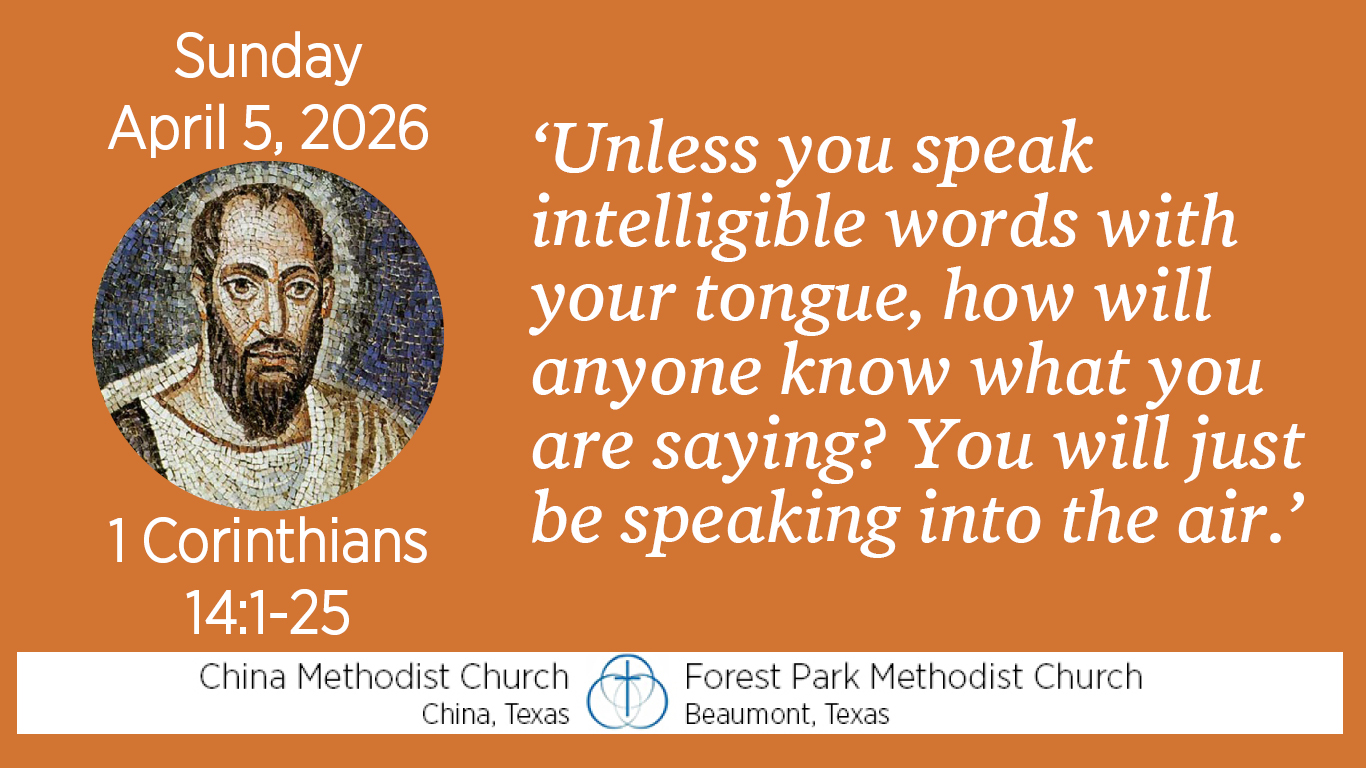
Tongues
Day 602, Sunday, April 5
1 Corinthians 14:1-25
The readings for the last few days have touched on the topic of speaking in tongues. Today in chapter 14 Paul goes into it in depth.
He doesn’t question the validity of the gift of tongues; in fact he claims that “I speak in tongues more than all of you.” He says, though, that speaking words people can understand (prophecy) is more productive.
In Acts and in the letters we see three variations on the gift of tongues. In the second chapter of Acts, people miraculously speak in human languages they do not know. “Speaking in tongues” can also refer to a kind of prophesy that requires two recipients: the one who speaks the Spirit-given message in an unknown tongue, and another person who is present to interpret it. A third way the word is used is sometimes called a “prayer language,” where a person prays in sounds that go beyond comprehensible words. This third use is suggested in verse 4, “Anyone who speaks in a tongue edifies themselves.”
The cases I have seen of speaking in tongues that I have the most confidence in are of the third kind. In those instances, the gift was given to people who progressed rapidly in their Christian growth.
A word you sometimes come across today is “cessationism,” which is the belief that the gift of the more miraculous gifts ceased after the writing of the New Testament.
-Rev. Mark Fleming
Sunday meditation
Psalms 106:1-5
Praise the Lord.
Give thanks to the Lord, for he is good; his love endures forever.
Who can proclaim the mighty acts of the Lord or fully declare his praise? Blessed are those who act justly, who always do what is right.
Remember me, Lord, when you show favor to your people, come to my aid when you save them, that I may enjoy the prosperity of your chosen ones, that I may share in the joy of your nation and join your inheritance in giving praise.
Prayer focus
We are limited in our ability to declare your praise, God. Give us the gifts we need to know and share your wisdom.